Saturday, May 28, 2011

We Remember

This morning Sleepy read that approximately 10.1 percent of Americans are veterans.

Here goes some arithmetic on the back of an envelope...

We lose around 6600 Americans to ALS every year. Military veterans have around twice the incidence of ALS than the general population.

So, 10.1% * 6600 * 2 = 1333 annual veterans' deaths from ALS.

So, since Lou Gehrig died in 1941, we have had around 80,000 veterans who have died from ALS.

That would be even more names than are on that agonizingly long Vietnam Memorial wall. Enough is enough. Those who put up their lives to defend our freedoms deserve better.

Friday, May 20, 2011

One Should Not Whine About One's Job

...on one's employer's facebook wall.

I found this facebook posting interesting. It was on the ALSA wall where they have finally made a comment regarding some offensive radio comments on a man with motor neuron disease.


ALS Association Sybil, 1st I saw it was Wednesday morning when I came back to work. I am one person trying to keep this page going, on top of all my other job responsibilities, and I have to take care of my young children after work hours. The ALS Association consists of real people with full time jobs and families, many of us caregivers after work for children and aging parents living with a variety of disease. I'm sorry if I wasn't on this quickly enough for you. Believe me, I understand the urgency. My grandfather died of ALS, so I am not just a clock puncher without compassion here. I work for the ALS Association because I WANT to. And like every one of you, we are all doing the best we can with the resources we have.


It's not about real people with compassion who WANT jobs. It's about results.

For many years we have seen ALSA fail to be a part of the online conversation and we have seen countless media opportunities muffed for lack of timely response.


If this happened to be a volunteer representing the ALS Association, then please forgive me for the misunderstanding. Whether an employee or a volunteer making the statement, it's past time to engage a communications professional who understands and can handle the 24/7, spontaneous nature of so many of today's media. Those smart phones don't shut down at 5 p.m., do they?

Friday, May 6, 2011

Let's Learn What Restaurants Finally Learned


This morning our local paper carried an enjoyable column where a restaurant manager listed his favorite places to eat in our city. What a great insight into the really good dish at the hole-in-the-wall strip mall spot. How nice to know about the old staple local restaurant that still has good comfort food. It's even refreshing to see that a hotel dining room has service that a peer professional admires.

Restaurants have learned that the more people eat out, the more people eat out. Each has to sell its unique place in a diner's options without belittling the place of its peers. Each restaurant's hat tip to another restaurant makes the public want to try both places. Today restaurants aren't focused as much on a growing market share as much as they are on a growing market.

It's a tough business. It's as tough or tougher than trying to keep a 501(c)3 afloat.

Are our ALS organizations being myopic on having a share of a fixed (or shrinking) market of existing donors? Do they view each other as hard-nosed, cutthroat competition rather than peers who bring different things to the fight against ALS? Have they missed the boat on making the market grow?

When a disease is as vexing as ALS has been, donors may actually want to support several organizations. Some people like a Big Mac while others like sushi while others like Michelin stars... and some people actually like them all.

When a disease is such a well kept secret as ALS has been, perhaps it's time to start getting smarter about how to look beyond donor market share and deal with growing the market.

Restaurant week, anyone?


Monday, May 2, 2011

We Need A Time-Lapse Image Of ALS

Again this year the MDA and the ALS Association are featuring vignettes of people with Lou Gehrig's Disease to observe ALS Awareness Month in the U.S. They are snapshots of courageous people and are somehow timeless.

Don't you love the time-lapse images from big events? The royal wedding's was amazing. Every year the Indy 500 gives us a magnificent view of a long day of activities. Football games on time lapse are great fun.


Perhaps next year instead of the still-snapshot vignettes of those with ALS we could have a time-lapse image of the disease that takes a person from being the picture of health to a wheelchair and then to a bed and coffin far too fast. That would make an impression. That would really tell the story.

Friday, April 22, 2011

Cure ALS. Save The Earth.

Today as we focus on the health of our planet, let's consider an investment that will save human lives and the life of Mother Earth.

ALS requires incredible amounts of durable medical equipment. Once you acquire one expensive, plastic-laden device, the disease moves so quickly that you're ready for the next piece of equipment that will permit you to breathe or eat or communicate or move. Healthcare delivery has tons and tons of consumables that you have to buy with these devices.

Anyone who has dealt with ALS will tell you that it takes a lot of stuff to deal with ALS, and caregivers are forced into purchases that give them few planet-friendly options.

Today as we celebrate finding ways to preserve our environment and natural resources, let's consider an investment that will preserve some precious human lives, too. ALS research is underfunded. Let's fund it sufficiently and raise the bar on research efforts so that the cause and cure may be found. That will be good for people and for the planet.

Come to think of it, finding if there is an environmental cause that triggers ALS would be extremely good for our planet in many ways. Nobody wants ALS, and nobody should have to live its path of personal and environmental destruction.

Saturday, April 9, 2011

Physicians, Nurses, Aides -- Where Do You Look For Car Or Hotel Reviews?


Dear Healthcare Professionals,

I read in this morning's paper that more of you are going online to market your practices and to teach patients what they need to know about wellness and their conditions.

Here's a news flash. That's a two-way street!

You should also be going online to learn about ALS. There is a whole lot for most of you to learn. I'm not talking about slick CME courses (although there are some if you take the time to register and login at the CDC's ALS Registry site. ) I'm talking about learning about ALS from the people who are in the trenches. Do you think you already know a lot about ALS? Do you think that it's so "rare" that you don't need to know about it? Do you think that once you've seen a case or two that you've seen it? Wrong on all counts.

Here is some gritty continuing education for you. Simply take a look. You may have to register on some of these sites to be able to view the conversations, but you can handle that.

If you are shopping for a new car or a vacation spot, I'll bet you're willing to search the internet and learn. How about putting the same effort into learning about life with ALS? Oh, and it's a family disease as you'll soon see. Caregivers run themselves ragged and kids are caught in a nasty pit of caregiving and emotions. It's a disease where patients have to rely on each other to figure out how to navigate the conflicting information they get from the healthcare system. It's a disease where patients get tired of having their peer friends die. It's a disease where professionals who are supposed to help them don't really know enough to do so.

Take a look. How about putting as much effort in understanding ALS as you would in shopping for a new car or choosing a hotel?


Tuesday, March 29, 2011

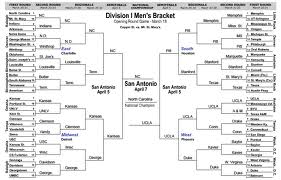
The ALS Treatment Tourney Makes The World's Smallest Set Of Bracket Choices


How are your men's NCAA hoops bracket picks doing? Did you pick with your heart rather than your head? Are you questioning the original seeds? Are you looking up data on VCU now that they've become the hottest team in the tourney.

With a few google searches, you can find data on every team in the NCAA hoops tourney in exquisite detail. You can make informed choices. You can override your data sense and pick with your heart if you like, but you can swim in data if you like.

People with ALS don't have data to help make informed treatment choices. Shoot, they don't have enough treatment options to give them even a two-round bracket.

What is wrong with this picture?

Wednesday, March 23, 2011

The Fight Against ALS Needs A Guiding Star

An activist, not merely a celebrity spokesperson...

Friday, March 18, 2011

We Grasp At The Same Straws - Over 70 Years Later

A Reuters story on the potential use if Vitamin E in ALS was published yesterday.


Google "Vitamin E ALS Eleanor Gehrig."

We grasp at the same straws over seventy years later. What is wrong with this picture?

Sunday, March 6, 2011

We Need Some "I Was Fine As-Of..." Nametags!


For advocacy day on Capitol Hill, wouldn't it be interesting for those many people with ALS to have some nice big badges with their "I was fine" dates. That would get the attention of those healthy young staff members who listen to our case for increased research funding! It might make them squirm, and that's good.

Most people with ALS were golfing or sailing or shooting hoops or playing catch with the kids not so long ago. ALS strikes with a nasty punch, and vibrant people end up in wheelchairs or with android voices speaking for them in a matter of a few months.

Maybe that "I was fine" date would make some interesting impressions on some vibrant people who can make a difference in research funding.

Lord, What's A Cubit?


The world likes to measure the "problem" of a disease in the number of patients affected today. We need to learn to tell the story better -- that the "problem" is actually the way we are measuring the ALS problem.

We used to measure boats in cubits and shoe size with machines that dumped xrays in our feet. It is not unprecedented to change the paradigm for measuring something.

So... how do we quantify the real problem when we seek attention and resources for ALS? What's the pertinent measure?

  • I would love to have a "wow" visual to show the problem of pouring a large incidence into a small prevalence.
  • Is there some kind of incidence::prevalence ratio that makes the ALS pop up as a more critical problem than other diseases (that are nonetheless difficult but not as quickly fatal)?
  • One good thing that I can see coming from a reduced perception of prevalence is that asking for quicker SSDI benefits or better homecare coverage or continuing veterans' benefits should not be as difficult since the cost would be perceived as smaller. Perhaps we can actually leverage that "it doesn't affect many people" perception and step up the benefits available to those dealing with the beast.
  • The case for research is a tough one unless we can produce numbers that show the market value of expanding that prevalence number. That number would grow and grow with some life-extending therapies.

I hope that we can use our heads to explain the problem better to the public and to our government. We all know that ALS is a problem... but the old measures will make it continue to live in the shadows. Urgency is not stressed by fixating on how many people are alive with ALS today. There are not enough who are permitted to stay alive today. That's the problem!